
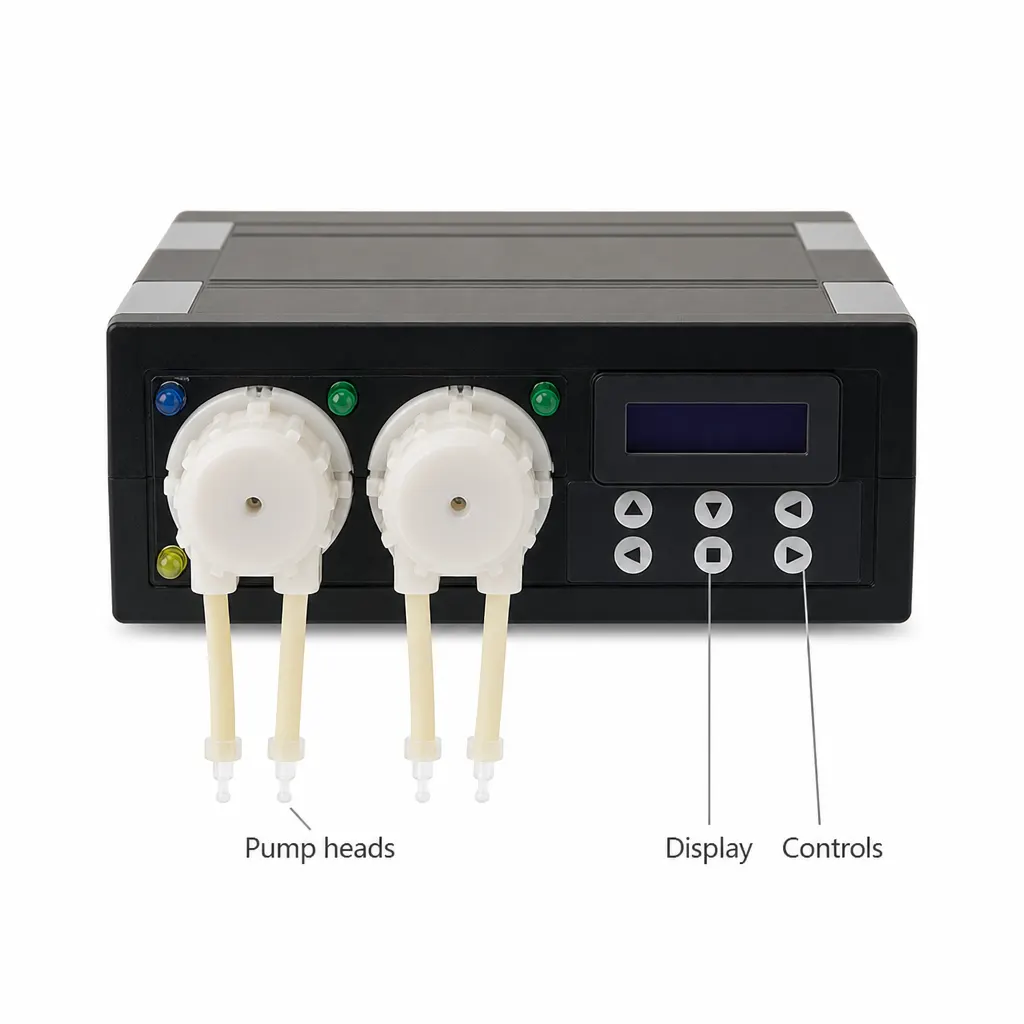
Short answer: An aquarium dosing pump for UK use should be chosen around the aquarium routine and the specifications you can actually verify. The current Dosingpump page describes a Jebao DP-2 two-head configuration for marine and coral aquariums, with a listed peristaltic pump design and plastic construction. It does not publish a flow rate, maximum head height, dosing accuracy, calibration method, tubing material, chemical compatibility, power supply or certification. That makes the product page useful for identifying the format, but not for promising a particular daily dose. Match the two-head layout to your plan and ask for missing details before relying on it.
Start with the aquarium job
An aquarium dosing pump is part of a wider maintenance routine, not a substitute for testing or observation. Decide what you need to add, how often the addition is made, where the containers will sit and how the delivery line will reach the aquarium. The current page supports a marine and coral aquarium context, but it does not state the liquid types that may safely pass through the pump.
The two-head description may suit a plan involving two separate additions, but it does not tell you whether the pump can deliver the volume your aquarium requires. OATA advises marine aquarists to understand and test water quality, so the pump should follow a measured aquarium plan rather than determine one.
| Buying question | What the current page says | What remains unverified |
|---|---|---|
| Format | DP-2 two-head dosing-pump configuration | How the heads are controlled and scheduled |
| Intended setting | Marine and coral aquarium use | Species-specific liquid and dosing suitability |
| Pump description | Peristaltic pump design | Flow rate, repeatability and maximum head |
| Construction | Plastic construction is listed | Tubing material and chemical compatibility |
Plan the installation without guessing
Before ordering, draw the route from each reservoir to the aquarium and note the height, bends, clips and places where a line could siphon or drip. The manufacturer does not specify maximum head height, tubing dimensions or a priming procedure, so a route that looks simple on paper still needs confirmation from the manual or seller.
Keep each liquid line identifiable and physically separated from incompatible products. Do not infer chemical compatibility from the word peristaltic or from plastic construction. If the liquid, tubing or connector is not documented, treat it as unknown.
- Write down the intended liquid, target dose and dosing times from the aquarium plan.
- Measure the vertical lift and route length, then ask for the published head and tubing limits.
- Confirm the exact power supply, voltage and controller arrangement before connecting anything.
- Check how each head is identified and how priming, calibration and manual override are documented.
- Test the delivered volume using a suitable method before connecting the line to livestock water.
Separate aquarium care from pump claims
A dosing pump can make a repeated addition easier to organise, but it does not prove that the aquarium needs that addition or that the delivered volume is correct. OATA's marine guidance treats water quality testing as part of responsible aquarium care. Record the aquarium test result, the intended dose and any change you make so that a problem is not blamed on the pump without checking the wider routine.
The product page does not state dosing accuracy, calibration intervals, flow stability or a maximum daily volume. Do not use the two-head format as evidence of precise dosing, continuous operation or suitability for a particular supplement.
Limits and checks before buying
This listing may fit a buyer who needs the documented DP-2 two-head format for a marine or coral aquarium and is prepared to verify the missing installation details. It is not enough evidence for a promised flow rate, maximum lift, chemical compatibility, calibration result or safety certification.
The manufacturer does not specify flow rate, head height, accuracy, calibration, tubing material, chemical compatibility, voltage, power supply, runtime or certification on the current product page. If any of those details controls the health of the aquarium or the safety of the installation, obtain them in writing or choose a better-documented pump.
Related guides and product details
For a UK aquarium dosing pump, confirm the two-head fit and the complete liquid, tubing, power and calibration requirements before ordering. Read Reef Tank Dosing Pump: Match the Routine to the Facts for related guidance. Read Two-Head Dosing Pump Aquarium: What to Verify for related guidance. Review the documented specification on the Jebao dp-2 two-head marine aquarium dosing pump product page before ordering.
Sources and safety context
- Supports the DP-2 two-head format, marine and coral aquarium positioning, peristaltic pump description and plastic construction. Current Dosingpump aquarium dosing pump product page.
- Supports testing and monitoring water quality as part of marine aquarium care. How to test for water quality in a marine tank or aquarium.