
Short answer: A two-head dosing pump for an aquarium is useful to compare when you genuinely need two separately managed delivery lines. The current Dosingpump product page describes a Jebao DP-2 two-head configuration for marine and coral aquarium use, plus a listed peristaltic design and plastic construction. That evidence does not reveal the flow rate, maximum head, dosing accuracy, calibration method, tubing material, chemical compatibility, voltage or power supply. Treat the two-head label as a format description only. Before buying, map the two liquids and routes, then obtain written answers for the missing details that control the installation.
Understand what two heads tells you
The phrase two-head gives a useful starting point: the listing is describing two dosing paths in the DP-2 configuration. It does not, by itself, explain whether both heads share controls, whether they can run at different times or whether each head has the same output. Those are product-specific questions for the manual or seller.
The marine and coral aquarium positioning also does not name a dosing liquid. Do not infer suitability for saltwater, supplements, additives or cleaning solutions from the peristaltic description or plastic construction.
| Feature question | Evidence available | Question to ask |
|---|---|---|
| Heads | DP-2 two-head configuration | Can the heads be scheduled and adjusted independently? |
| Aquarium setting | Marine and coral aquarium use | Which liquids and livestock plans are supported? |
| Pump type | Peristaltic design is listed | What flow and head limits apply to each line? |
| Materials | Plastic construction is listed | What tubing and wetted materials are supplied? |
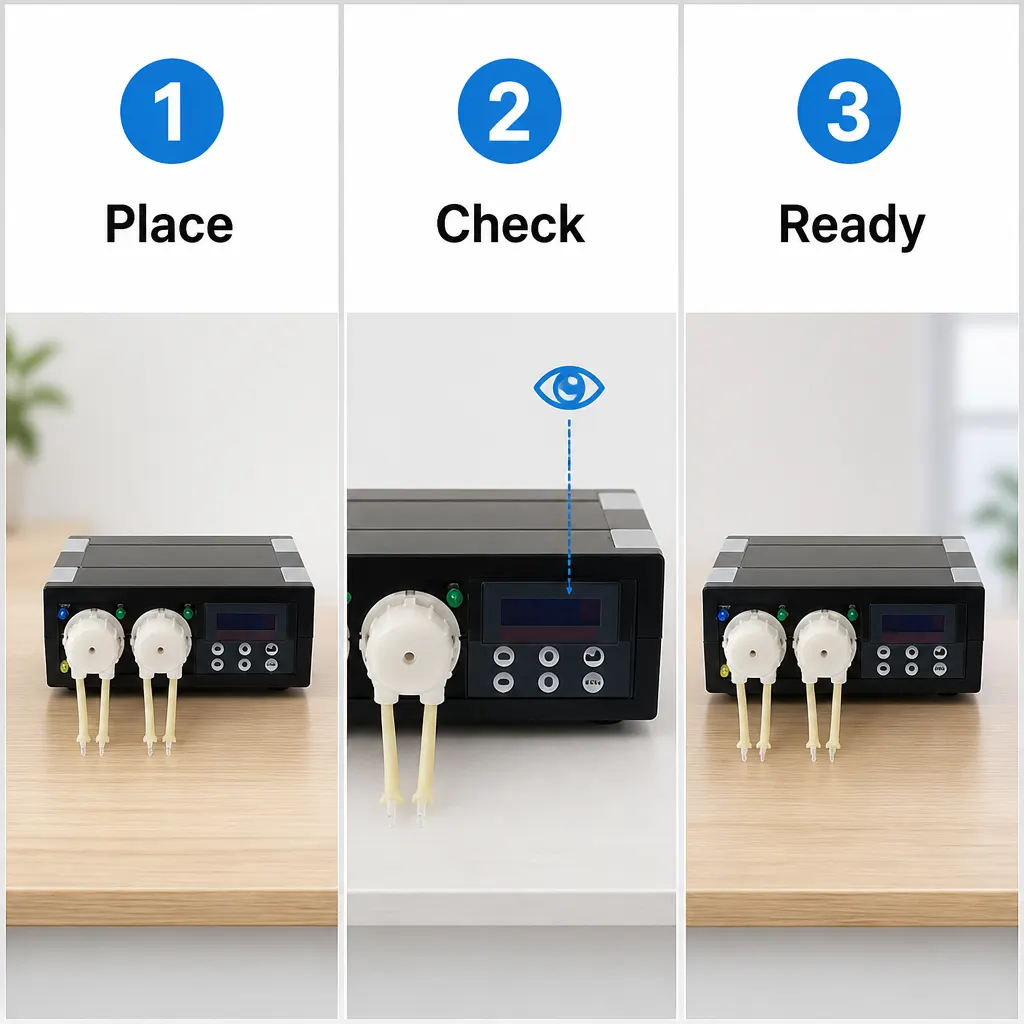
Compare the two delivery paths
A two-line installation should be assessed as two routes, not one. Measure the reservoir position, vertical lift, line length, bends and outlet for each head. The manufacturer does not specify head height, tubing dimensions or anti-siphon behaviour, so the route cannot be approved from the product title.
Keep the containers and lines labelled. The pump page does not identify chemical compatibility or cleaning instructions, and a shared assumption about materials can create a poor match for the actual liquid.
- Name the two intended additions and record why each is needed.
- Measure both routes and ask for the exact head, line and connector limits.
- Confirm the voltage, power supply and control method for the exact DP-2 listing.
- Verify the independent setup of the two heads before connecting them to the aquarium.
- Check each delivered amount separately and keep the result in the maintenance record.
Keep dosing inside aquarium care
OATA's marine guidance supports testing water quality rather than relying on an assumed schedule. Use a dated record for tests, water changes, additions and livestock observations. If a reading changes unexpectedly, pause the automatic routine and investigate the aquarium and equipment before increasing a dose.
The listing does not state repeatability, accuracy, calibration intervals, alarm behaviour or maximum daily volume. Two heads can organise two lines, but they cannot replace the judgement needed to decide what the aquarium requires.
Limits and checks before buying
Choose this listing only if the documented DP-2 two-head format and marine or coral aquarium positioning match the job, and only after the missing installation facts have been confirmed. Do not turn a format label into a performance specification.
The manufacturer does not specify flow rate, maximum head, accuracy, calibration, tubing material, chemical compatibility, voltage, power supply, runtime or certification. If those gaps matter to the aquarium or the electrical installation, wait for written evidence or select a product with a complete manual.
Related guides and product details
A two-head aquarium pump is worth considering only after each liquid route, power requirement and calibration method has been verified. Read Aquarium Dosing Pump UK: Check the Evidence First for related guidance. Read Reef Tank Dosing Pump: Match the Routine to the Facts for related guidance. Review the documented specification on the Jebao dp-2 two-head marine aquarium dosing pump product page before ordering.
Sources and safety context
- Supports the DP-2 two-head configuration, marine and coral aquarium positioning, peristaltic description and plastic construction. Current Dosingpump aquarium dosing pump product page.
- Supports testing and recording marine aquarium water quality rather than relying on an assumed dosing schedule. How to test for water quality in a marine tank or aquarium.